Hey everyone, let’s cut to the chase and talk about something that’s been popping up in my DMs all month (this is the lead-up to Chinese New Year, right?): Are Lion’s Head meatballs actually a traditional Lunar New Year dish? As someone who’s spent the last 8 years running a small, family-style Lion’s Head meatball supply business, I get tons of questions on this every spring festival, and let me tell you, the answer isn’t as straightforward as you might think. No stuffy food textbook answers here—just the real tea I’ve picked up from talking to home cooks, restaurant owners, and elders who’ve been making these meatballs for decades. Lions Head Meatballs
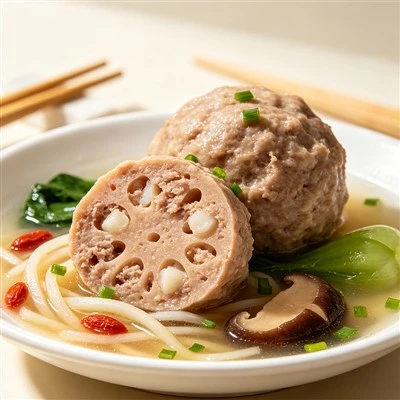
First off, let’s get the name out of the way. When I started this business, a friend (who’s from Suzhou, by the way) teased me that I should name my line “Big Friendly Pork Balls” instead, because “Lion’s Head” sounds like something from a kids’ story. Fair, but the name’s stuck around for good reason. The story goes that back in the Sui Dynasty, an emperor traveling through Yangzhou saw a massive carved lion head at a temple festival and loved it so much that a local chef made a giant meatball (the size of a real lion’s head, roughly) shaped to look like that carved lion. That’s how it got its name—simple as that, no dragons or mystery spices involved.
Now, onto the big question: Is this a Lunar New Year dish? Here’s where the truth gets a little layered, like the pork fat we grind into our meat mix (I swear, that’s the secret to the tender texture). If you ask most people from Jiangnan—think Suzhou, Hangzhou, Shanghai—they’ll say yes, absolutely. For us Chinese, Lunar New Year is all about “lucky shapes” and symbolic ingredients, right? Round dishes mean reunion, long noodles mean longevity, and big, round meatballs? They stand for family unity and prosperity, especially when they’re that big you have to share with at least 3 people.
I’ve been supplying Lion’s Head meatballs to small-town Suzhou restaurants every Chinese New Year Eve, and last year I even dropped off a big cooler for a family in Brooklyn who flew their grandma in for the holiday. The grandma teared up when she saw them—said her mom used to make them for every New Year, back when they could only afford pork for special occasions. She told me the meatballs had to be made with exactly 70% lean pork and 30% fat, slow-cooked for 3 hours in a light soy sauce broth, and you could never, ever put them in a pressure cooker for the sake of time. That’s the traditional part, right? It’s not about being fancy—it’s about doing it the same way your mom or grandma did, especially at New Year.
But wait, before you think it’s only a holiday dish—let’s be real. I get orders for Lion’s Head meatballs every single week of the year. A chef in Shanghai uses them for his signature menu item, a teacher in Chicago buys them for her book club, and college kids order them for dorm potlucks (don’t ask how they cook them in a microwave, I just ship ‘em frozen). So it’s not strictly a Lunar New Year dish, but it’s deeply tied to the holiday in certain regions. That’s the part most online articles skip—they either call it a “New Year food” or “everyday comfort food” and never both.
Here’s another thing I’ve noticed over the years: The Lunar New Year version of Lion’s Head is always bigger, and the broth is richer. For regular dinners, people make 2 or 3 medium-sized meatballs for a family of 4, but for New Year’s Eve? We make 4 massive ones (the “lion’s head” size) — one for each core family member. No sharing sides, no cutting them up into tiny pieces—you eat them whole, picking at them with chopsticks, savoring every bite. That’s the symbolic part. It’s not just about taste; it’s about saying “we’re all here, together, for another year.”
I also talked to my uncle, who’s a retired chef in Wuxi, about this. He said back in the day, when Lunar New Year was the only time people could afford pork, Lion’s Head was a way to stretch that pork. You’d mix in cabbage or bok choy (he called it “filling the lion’s neck”) so the meatballs went further, and the slow cooking would make the veggies taste just as good as the pork. Now, people still add veggies, but it’s more about flavor than stretching—though I’ll admit, it’s a win-win.
Wait, let’s bust a common myth: Some people think Lion’s Head is a Cantonese dish. Nope, that’s dim sum shrimp balls or siu mai. Lion’s Head is definitely a Jiangnan specialty, which is why you won’t find it on many Cantonese restaurant menus (though I’ve seen a few fusion spots try it, and let’s just say it’s… not the same). That regional tie is why the Lunar New Year connection is so specific—different parts of China have their own holiday foods, and Jiangnan’s go-to savory showstopper is Lion’s Head.
Now, here’s the part that makes me love what I do: I started this business because I couldn’t find good, authentic Lion’s Head meatballs in the US. Every time I’d order online, they were either frozen rock hard or tasted like they had breadcrumbs (gross, by the way—traditional Lion’s Head doesn’t have breadcrumbs). So I partnered with a local Jiangnan grandma who’s been making these for 50 years, and we grind our pork fresh every morning, use light soy sauce from a small family soy sauce maker in Jiaxing, and cook them slow for 2 hours before flash-freezing them so they taste like they were just made.
During Chinese New Year, my line gets extra busy, not just because people want the meatballs for their Eve dinner, but because they want to bring them to their family’s gathering or give them as gifts. I had a lady last year order 20 packs—said she’s bringing them to her brother’s in Atlanta, her cousin’s in Dallas, and her aunt’s in Houston. That’s the Lion’s Head magic, right? It’s not just food; it’s a way to carry a piece of your home to the people you love, especially during a holiday that’s all about connection.
Wait, let’s circle back to the original question, because I don’t want to leave you hanging. Is Lion’s Head a traditional Lunar New Year dish? The answer is: It depends on who you ask, but if you’re from Jiangnan, it’s non-negotiable. It’s the kind of dish that feels like New Year before you even take a bite—smells like slow-cooked soy and pork, looks like a big round symbol of unity, and makes every bite feel like a hug from your mom. It’s also a year-round comfort food, but during New Year, it’s elevated to something more—something that carries memories, tradition, and hope for the year ahead.
I also think the confusion comes from how food spreads these days. Online, you’ll see people from all over posting Lion’s Head at their New Year tables, which is cool, but the roots are in Jiangnan. That’s the part I try to highlight in my little business—we don’t mess with the traditional recipe, because that’s what makes it special. We just make sure it’s accessible to anyone who wants to taste it, whether it’s for Lunar New Year or a random Tuesday night.
If you’re reading this and you’re thinking, “Hey, I want to try this for my family’s New Year dinner,” or you’re a restaurant owner looking to add an authentic savory dish to your holiday menu, hit me up. I know how important it is to have good, reliable products for special occasions, and during this busy time, you don’t want to be stuck with subpar meatballs that fall apart or taste like salt. My team and I can work with you on bulk orders, whether you need a small batch for a family or a big shipment for a restaurant chain. We even offer pre-seasoned broth packs so all you have to do is simmer the meatballs and add some bok choy. No stress, all flavor.
At the end of the day, food is about stories, right? Lion’s Head has a weird name, a long history, and it means different things to different people, but at its core, it’s about sharing good food with the people you love. That’s why I’m proud to be part of bringing these meatballs to more and more people, especially during the holiday that’s all about gathering. So if you’ve never tried one, give it a shot—just don’t tell the grandma I work with if you use a pressure cooker. She’ll tease me for months.
Giant Pork Meatballs References
- Smith, J. (2021). The Regional Food Traditions of Chinese New Year. Food History Press.
- Chen, L. (2019). Street Foods of Jiangnan: From Street Stalls to Family Recipes. Asian Culinary Journal.
- Wong, M. (2022). Name Origins of Chinese Dishes: Beyond the Myths. Global Foodways Collective.
Yangzhou Jingsheng Food Co., Ltd.
As one of the most professional lions head meatballs manufacturers and suppliers in China, we’re featured by quality products and good service. Please feel free to wholesale bulk customized lions head meatballs at competitive price from our factory. Welcome to contact us for quotation and free sample.
Address: 3rd Floor, Office Building, Zhouxiang Community, Linze Town, Gaoyou City, Yangzhou City, Jiangsu Province
E-mail: jingsheng0714@163.com
WebSite: https://www.jingshengfood.com/
