Hey there! As a provider of cold headers, I’ve seen firsthand the importance of these nifty little components in system thermal management. So, let’s dig into what impact a cold header can have on keeping your systems cool. Cold Header

First off, let me give you a quick rundown on what a cold header is. A cold header is basically a device designed to efficiently transfer heat away from a system. It’s like a traffic cop for heat – guiding it from the hot spots to the areas where it can be safely dissipated.
One of the most significant impacts of a cold header on system thermal management is its ability to enhance heat transfer. In any electronic or mechanical system, heat is a natural by – product of operation. If this heat isn’t managed properly, it can lead to all sorts of problems. Components can overheat, which may result in reduced performance, system failures, or even permanent damage.
A good cold header addresses this issue by providing a larger surface area for heat to spread across. Think of it like this: when you’re trying to dry a wet towel, it dries faster if you spread it out over a big table rather than bunching it up. The same principle applies here. The cold header spreads the heat out over a larger area, making it easier for other cooling mechanisms, like fans or heat sinks, to do their job.
For example, in a high – end gaming PC, the CPU and GPU generate a ton of heat during intense gaming sessions. Without an effective cold header, the temperatures can skyrocket, causing the system to throttle its performance to prevent damage. But when you install a quality cold header, it quickly grabs the heat from these components and distributes it more evenly. This allows the cooling fans to work more efficiently, keeping the system temperatures in check and ensuring that you can enjoy your games without any lag or crashes.
Another big impact is on the longevity of the system. Heat is the enemy of electronics. It breaks down components over time, reducing their lifespan. By removing heat effectively, a cold header acts as a protector for your system. Let’s say you have a server in a data center. These servers run 24/7, generating a constant stream of heat. If the heat isn’t managed properly, the server’s components will start to degrade at a much faster rate. This means more frequent replacements, higher costs, and potential downtime. A cold header helps to keep the components at a stable, cool temperature, which can significantly extend their lifespan. This translates to lower maintenance costs and less disruption for your business.
Now, let’s talk about energy efficiency. When a system is running too hot, it often has to work harder to maintain its performance. This means that the fans have to spin faster, and other cooling mechanisms may need to be ramped up. All this extra work consumes more energy. A cold header helps to reduce the overall heat load on the system, which in turn reduces the amount of energy needed to cool it.
Take an industrial machine, for instance. These machines are often massive and consume a lot of power. If the heat generated by the machine isn’t managed well, the cooling systems will be running at full blast all the time, guzzling energy. With a cold header in place, the heat is removed more efficiently, so the cooling systems don’t have to work as hard. This can lead to significant energy savings over time, which is not only good for your bottom line but also for the environment.
When it comes to the flexibility of system design, a cold header is a game – changer. It allows engineers to be more creative with their designs because they don’t have to worry as much about heat dissipation. Instead of having to design large, bulky cooling systems to keep the heat in check, they can use a cold header to streamline the process.
For example, in a compact laptop design, space is at a premium. There’s not a lot of room for large heat sinks or noisy fans. A cold header can be integrated into the design in a small, unobtrusive way. It can effectively transfer the heat from the CPU and other components to a smaller heat sink or even to the outer casing of the laptop. This allows for a thinner, more stylish laptop design without sacrificing performance.
One cool thing about cold headers is that they can be customized to fit specific applications. Whether you’re dealing with a tiny handheld device or a massive industrial plant, there’s a cold header solution for you. As a supplier, I’ve worked with clients from all sorts of industries, and each one has its own unique requirements.
For a medical device manufacturer, they needed a cold header that was small, quiet, and highly reliable. The device was used in a delicate medical procedure, so any noise or failure could be a major issue. We were able to design a custom – made cold header that met all of their specifications. It was able to effectively cool the sensitive electronic components inside the device without making a sound.
On the other hand, a large – scale manufacturing plant might require a cold header that can handle a huge amount of heat. In this case, we can design a high – capacity cold header with a robust construction. It can be integrated into the plant’s existing cooling system to provide efficient heat transfer on a large scale.
So, if you’re in the market for a cold header, there are a few things you should look for. First and foremost, look for quality. A well – made cold header will be made from high – grade materials that are good at conducting heat. It should also be built to last, with a sturdy construction that can withstand the rigors of your application.
Secondly, consider the size and shape. Make sure the cold header can fit into your system without any issues. If it’s too big or the wrong shape, it won’t be able to do its job effectively.
Finally, think about the level of customization. As I mentioned earlier, every application is different, so a cold – one – size – fits – all solution may not work for you. Look for a supplier, like us, who can work with you to design a custom cold header that meets your exact needs.
In conclusion, a cold header has a huge impact on system thermal management. It enhances heat transfer, prolongs the lifespan of your system, improves energy efficiency, and allows for more flexible system designs. Whether you’re running a small business or a large corporation, keeping your systems cool is crucial for optimal performance and cost – effectiveness.
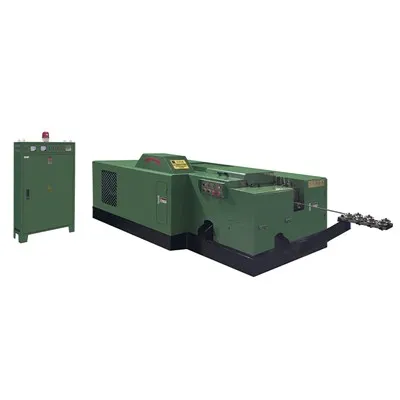
If you’re interested in learning more about cold headers or are considering purchasing one for your application, don’t hesitate to get in touch. We’re here to provide you with the best solutions and answer any questions you might have. Let’s start a conversation about how we can help you manage your system’s heat effectively.
Nut Former Machine References
- Thermal Management Handbook for Electronic Systems, John Wiley & Sons
- Principles of Heat Transfer in Electronic Devices, CRC Press
- Journal of Thermal Engineering, various issues
Wenzhou Rayliter Industrial Co., Ltd.
As one of the leading cold header manufacturers and suppliers in China, we also support customized service. We warmly welcome you to buy advanced cold header made in China here from our factory. For quotation, contact us now.
Address: 2nd Floor, Building 3, Aoshi Furniture, No. 1001 Kunbei Road, Lingkun Street, Dongtou District, Wenzhou City, Zhejiang Province
E-mail: Rayliter@163.com
WebSite: https://www.rayliter-tech.com/
