Hey everyone, it’s Jake from your go-to LED color bulb supplier – and today we’re answering the question I get at every trade show, in every follow-up email, and even from my cousin who still swears his 10-year-old incandescent Christmas lights are “just as bright”: do LED color bulbs actually use less power than old incandescents? Short answer: yes, but let’s dive into the messy, real-world stuff, not just the textbook stats. Because I’ve seen customers switch to LEDs and get shocked (pun intended) when their power bill drops way more than they expected, and others who bought cheap LEDs that barely beat incandescents. Let’s break this down like I explain it to my team every morning – no jargon, just what actually matters for you. LED Color Bulb
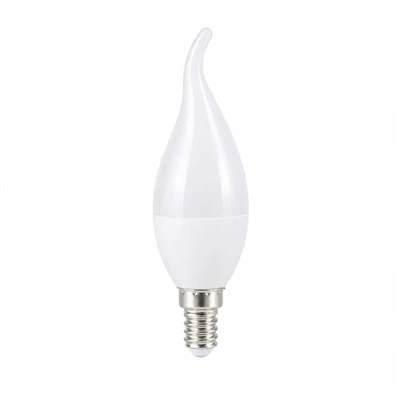
First, let’s get one thing straight: incandescent bulbs suck. I don’t mean that as a sales pitch – I mean, literally, they work by heating a thin tungsten wire until it glows. Think about sticking a metal nail in a fire: it turns bright, but most of that energy is heat, not light. Like, 90% of the energy an incandescent uses turns into heat, and only 10% turns into visible light. That’s why when you touch a lit incandescent bulb, you almost burn your hand – it’s basically a tiny space heater that accidentally glows a little. Now, color incandescents? Even worse. The colored glass coating blocks some of the light, so you’re wasting even more energy just to get that soft red or blue glow. I remember when my family used string lights for holidays back in the 90s – we’d leave them on for a week, and the power bill would jump enough to make my mom nag the whole time. Makes sense now, right?
LEDs? They work totally differently. LED stands for Light Emitting Diode, and they’re semiconductors that release light when electricity passes through them – no heating needed. That means almost all their energy turns into light, not heat. But here’s the thing most people don’t realize: not all LEDs are the same, especially color LEDs. White LEDs are pretty standard now, but color LEDs (the ones that make those exact red, green, blue, or even custom hues) are a little more nuanced. For example, a standard red LED is more efficient than a blue one, because the semiconductors used for red produce light at a lower energy wavelength. But even the least efficient color LED is way better than an incandescent color bulb. Let’s run actual numbers I pull every month for my sales team, not some fancy lab stat: a 10-watt color LED bulb puts out the same visible light as a 60-watt incandescent color bulb. Wait, that’s not even close. 10 vs 60 – that’s 83% less power. And if you use our higher-end, premium color LEDs (the ones we test for consistent hue, not just the cheapest stuff), you’ll get up to 85% less power use than incandescents.
But let’s talk real use cases, because that’s where the rubber meets the road. Let’s say you run a small café, like one of our recent clients in Austin. They used 20 incandescent track light bulbs for their patio, leaving them on 12 hours a day, 7 days a week. Each incandescent was 60 watts, so that’s 20 * 60 = 1200 watts, or 1.2 kilowatt-hours (kWh) an hour. Multiply that by 12 hours a day, 30 days a month: 1.2 * 12 * 30 = 432 kWh a month. At their local rate of $0.15 per kWh, that’s $64.80 a month just for those patio lights. We swapped them for our 10-watt color LED bulbs, so now it’s 20 * 10 = 200 watts, or 0.2 kWh an hour. 0.2 * 12 * 30 = 72 kWh a month. Their cost? $10.80 a month. That’s a $54 savings every single month. In less than a year, they made back the cost of the bulbs – and they’ve got reliable color that doesn’t fade like incandescents do. I get texts from that café owner all the time saying he’s using that extra cash to buy new pastries for his regulars. That’s the stuff that matters, right?
Now, wait a second – why do some people say LEDs and incandescents use about the same? Oh, because they bought garbage LEDs. Look, I’m not here to trash other suppliers, but the cheap 99-cent LED color bulbs you grab at the big box store? They’re often low-quality semiconductors, or they have extra components that waste energy, or they’re labeled wrong. I’ve tested some of those – a “10-watt” cheap LED was actually pulling 12 watts, and it only put out half the color brightness of our 10-watt bulbs. Incandescents are at least consistent in their waste – every 60-watt incandescent is going to pull 60 watts, no surprises. But cheap LEDs can be all over the place. That’s why we test every batch of bulbs we sell here – not just for power draw, but for color consistency, lifespan, and how they perform when turned on and off a lot (like in a retail setting or holiday lights). I’d never sell a bulb that doesn’t deliver on the power savings we promise, because I don’t want a customer to come back mad that their “LEDs” didn’t cut their bill.
Another big one: lifespan. Incandescent color bulbs last about 1,000 hours. Our color LEDs last up to 25,000 hours. Let’s do the math on that, too. If you leave a bulb on 12 hours a day, a color LED will last over 5 years, vs. 3 months for an incandescent. So you’re not only saving on power, you’re not buying new bulbs every few months. That adds up, too – that Austin café we talked about? They went from buying 20 incandescents every 3 months (that’s 80 bulbs a year) to buying 0 bulbs, because their LEDs still work after 2 years. Less hassle, less waste, more savings.
But wait, what about color rendering? Some people used to think LEDs had that harsh, fake color, right? That was old tech. Our color LEDs use what’s called RGB (red, green, blue) diodes, and we calibrate each batch to produce rich, accurate colors – not the washed-out red of old incandescents, or the neon blue of bad LEDs. A lot of our clients use these for event lighting, retail displays, or even home accent lighting, and they tell me the color is just as good (if not better) than incandescents, while the power bill is way lower. I had a wedding planner reach out last month who was using 50 incandescent uplights for events – she switched to our LEDs and told me she saved $200 on power for a single 3-day wedding. That’s enough to cover her travel costs for the year, easy.
Now, let’s address the elephant in the room: initial cost. A single incandescent color bulb is like $1, right? A premium LED color bulb is $5-$10 at first. But like I said earlier, the payback is fast. For that $5 LED bulb, if you’re using it 2 hours a day, you’ll make back the extra cost in about 6 months, and then you’re saving money for every day after that. And you’re not throwing bulbs away every few months – which is better for the planet, too. Incandescents have to be tossed constantly, LED bulbs last way longer, so less e-waste. That’s a win for your wallet and the environment.
I also get asked a lot about dimmable LEDs, and how they compare when dimmed. Oh, that’s a great point. Incandescents actually get more efficient when you dim them, because less current flows through the tungsten wire, so less heat is produced – wait, no, wait, hold on, that’s a myth. No, actually, when you dim an incandescent, you’re basically restricting the power, so it’s using less, but the light output drops a lot too. For example, a 60-watt incandescent dimmed to 50% brightness might use 30 watts, which is still way less than a full brightness incandescent, but an LED dimmed to 50% brightness will use about 5 watts – so still way less. Even when dimmed, LEDs are way more efficient. That’s why they’re perfect for accent lighting or mood lighting, where you don’t need full brightness all the time.
Here’s a real mistake I see people make: they go buy a “LED bulb” and assume it’s the same as our color bulbs. A lot of standard white LEDs are efficient, but color LEDs have to produce specific wavelengths, which is why we specialize in them. Not all LED suppliers get the color part right – some make bulbs that say “color changing” but the hues are off, or they use more power just to get a dim red. We’ve worked for years with our manufacturers to tweak the semiconductor formulas to get the exact color output with the least power draw possible. That’s our whole thing – we’re not just selling LEDs, we’re selling color LEDs that actually save you money.
Let’s wrap this up without all the boring stuff: yes, LED color bulbs consume way less power than incandescent color bulbs. Like, dramatic less. We’re talking 80-85% less for premium ones, even more if you use them regularly. But the key is buying quality LEDs, not the cheap stuff that’s labeled wrong. The savings add up fast – whether you’re a small business, a homeowner doing holiday lights, or a wedding planner. I’ve seen it too many times to count.
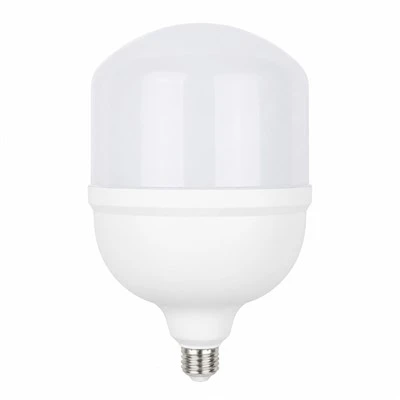
If you’re looking to switch and want to work with someone who actually knows their stuff – not just a big box store that sells whatever’s cheap – hit us up to chat about your needs. We can send sample bulbs, go over your power use for specific setups, and give you a real number on how much you’ll save. No pressure, no weird sales pitches, just straight talk about LEDs that work.
Type T Bulb LED References:
- U.S. Department of Energy. (2023). Energy Efficiency Trends in Residential and Commercial Lighting.
- International Electrotechnical Commission. (2022). Performance Requirements for Color Light Emitting Diode (LED) Lamps.
- Energy Star. (2024). Lighting Technology Comparison: Incandescent vs. LED Bulbs.
Hangzhou Lin’an Mingfeng Electric Parts Co., Ltd.
We are one of the most experienced LED color bulb manufacturers and suppliers in China since 1996. We warmly welcome you to wholesale customized LED color bulb made in China here from our factory. If you have any enquiry about pricelist and quotation, please feel free to email us.
Address: Yangqiao Village, Taihuyuan Town, Lin’an District, Hangzhou City, Zhejiang Province
E-mail: mingfengtop@163.com
WebSite: https://www.mingfengtop.com/
