Hey there,
I’m sitting here in my office, staring at a packed schedule of demos, a last-minute tweak for a new client’s ASU (that’s Air Separation Unit, for anyone new to the game), and a Slack message from a PhD buddy who’s stressing about not getting enough ultra-high-purity nitrogen for his battery R&D. If you’re someone in the research and development space—whether you’re a lab grad student tinkering with next-gen solar panels, a pharma researcher working on mRNA formulations, or a tech startup trying to crack better hydrogen storage—you’ve probably run into that same frustrating problem: reliable, pure gases that don’t break the bank. And more often than not, the unsung hero making that possible is an ASU. Air Separation Unit
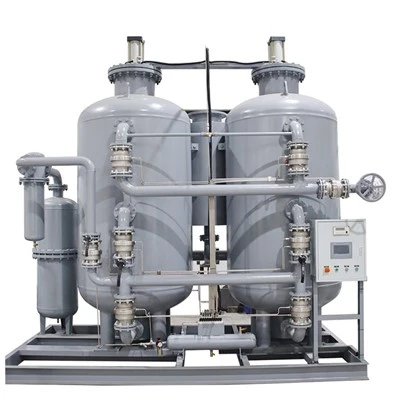
Let me break this down like I would to a new intern shadowing me last week. Most people hear “Air Separation Unit” and think “factory big tank making oxygen for hospitals.” Sure, that’s a huge part of it, but in R&D? ASUs are the backbone that turns “what if we test this material?” into “here’s a reproducible, publishable result” or “here’s a scalable prototype we can bring to market.” I’ve been supplying ASUs to R&D labs and small tech teams for 8 years now, and every time a customer tells me their project stalled because they couldn’t get consistent pure gas, I’m reminded how underrated these units are for innovation.
First off, let’s get one thing straight: R&D isn’t the same as a big industrial plant. A pharma lab at a university doesn’t need a 100-ton ASU that runs 24/7 for a million-gallon batch. They need something that can crank out 50 liters of 99.999% pure argon one day, maybe switch to ultra-high-purity nitrogen the next, and fit into a space that’s not a warehouse. That’s why modern ASUs come in all sizes now—from benchtop units for small academic labs to modular skids for startup R&D centers. For example, last year I worked with a team at a top materials science uni that was testing new ceramic catalysts for fuel cells. They were using expensive, disposable gas cylinders before, but those only gave them 2-3 hours of test time, and the purity varied depending on the batch from the supplier. With their compact ASU, they can run 24/7 tests for weeks, and the gas purity is consistent every single time. No more pausing experiments to wait for a new cylinder, no more data gaps because a random batch of oxygen had too much moisture messing up their catalyst performance.
Wait, let’s talk about that purity thing for a second. R&D experiments are so finicky—even a tiny impurity can skew results so bad you have to scrap weeks of work. Let’s say a pharmaceutical researcher is testing a new monoclonal antibody. They need nitrogen to blanket the storage vessels during formulation, right? If that nitrogen has even 0.1% of oxygen or water vapor, the antibody can degrade, and you’ll get false positive assay results that make you think your formula works when it actually doesn’t. That’s not just a hassle—it’s a waste of years of work and millions in grant money. ASUs deliver that kind of ultra-high-purity (UHP) gas because of how they separate air. The process uses cryogenic distillation, for the most part (though there are newer membrane and pressure swing adsorption (PSA) ASUs too, for lower-purity needs). When you cool air to super cold temps (around -196°C, basically liquid air), the different components—nitrogen, oxygen, argon, neon, krypton—all turn to liquid at different points. So you can separate them with crazy precision. For R&D, that level of control is non-negotiable. I had a client at a biotech startup last quarter who was testing a cancer drug candidate; their old cylinder gas had trace hydrocarbons that messed up their mass spec testing. Swapping to a small ASU fixed that immediately, and they just published their Phase 1 data a few months later. That’s the ripple effect of a good ASU.
Another big win for R&D: scalability. Most R&D projects start small—you’re testing a gram of material in a lab, then if it works, you need a kilogram, then a ton for a pilot line. Cylinder gas suppliers rarely scale smoothly. You start with small, frequent deliveries, then suddenly you need a huge volume, and the supplier can’t adjust quickly, or the price skyrockets because you’re a small customer. ASUs? They grow with you. A lot of my R&D clients start with a benchtop or small modular ASU for their initial lab work, then when they’re ready to move to pilot-scale testing (say, 10,000 liters of nitrogen per day for a hydrogen storage project), we can upgrade the unit with extra modules, or even add a second ASU if needed. No more switching gas suppliers mid-project, no more revalidating your experiment setup because the gas source changed. That continuity is priceless for R&D teams—they don’t want to play “gas supplier roulette” when they’re chasing a breakthrough.
And let’s not forget about the costs, especially for cash-strapped R&D teams. Academic labs are working on tiny budgets, startup R&D has to stretch every dollar they get from investors, and grant money is never as much as you need. Cylinder gas is super expensive when you’re using it for hours every day—you’re basically paying for the cylinder itself, the delivery, and the markup for small quantities. An ASU has a upfront cost, but after that, it’s basically just running on electricity (and air, which is free) to produce gas. I had a grad student client last year who was testing metal-organic frameworks (MOFs) for carbon capture. He was spending $1,200 a month on nitrogen cylinders for his tests. After we installed a small, energy-efficient ASU, his gas costs dropped to under $100 a month. That extra money? He used it to buy more test equipment and hire a part-time lab mate to run more experiments. That’s the kind of impact ASUs have beyond just providing gas—they free up R&D teams’ budgets to focus on actual innovation, not paying fuel bills.
Wait, let’s get into some specific use cases to make this real, not just generic stuff. I’ve worked with clients across almost every R&D sector, so let’s break down a few:
First, battery technology—right now, everyone’s chasing better lithium-ion batteries, solid-state batteries, even sodium-ion for grid storage. What do those projects need? Ultra-pure argon and nitrogen, mostly. When you’re assembling the battery cells, you can’t have oxygen or moisture in the environment, because that causes side reactions that lower cycle life. A lot of big battery manufacturers have massive ASUs, but the R&D teams at universities and startups building the next-gen cells don’t need that. They need a small ASU that fits inside their glove box area, producing UHP nitrogen to keep the glove box at the right purity level. Last year, I worked with a battery startup in Texas that was testing a new silicon anode design. Their old setup used four small nitrogen cylinders, which they had to swap every 6-8 hours. Swapping cylinders meant opening the glove box, letting in air, having to purge for 2 hours before testing again. With their new ASU, they never run out of gas—they just have it hooked up directly to their glove box. That cut their test downtime by 70%, and they were able to run 3x more cell tests in a month, which helped them secure a Series A round. That’s the kind of speed ASUs bring to R&D—when you don’t waste time on logistics, you move faster.
Next, pharma and biotech research. We talked about antibodies earlier, but there’s way more. Gene therapy uses nitrogen to freeze samples, to blanket bioreactors during production trials, to power analytical equipment like HPLC and mass spec. And argon is used for everything from cell culture to fermentation of new drugs. I had a client at a university biophysics lab that was studying the structure of a new antibiotic using X-ray crystallography. They needed ultra-high-purity argon to cool their crystal samples to super cold temps—any impurity in the argon would damage the crystal and make their data useless. Their old cylinders had occasional spikes in argon purity, which made half their experiments fail. Their ASU delivers 99.9995% pure argon 24/7, no spikes, no surprises. That work led to a new antibiotic candidate that’s now in pre-clinical trials. Can you put a price on that? Probably not, but part of that success was the reliable gas source from their ASU.
Then there’s hydrogen R&D—this is huge right now, with everyone trying to make green hydrogen from electrolyzers, and store it for long periods. Hydrogen is super flammable, so you need ultra-dry, pure nitrogen to purge lines, test storage tanks, and run fuel cell tests. Also, when you’re testing electrolyzer catalysts, even tiny amounts of oxygen or other impurities in the process gas can mess up your efficiency measurements. A lot of hydrogen R&D teams use cylinder hydrogen, but that’s expensive and risky for small-scale testing. ASUs can produce pure hydrogen too—wait, hold on, did I mention that? A lot of people think ASUs only make nitrogen, oxygen, argon, but many can separate and purify hydrogen too, from natural gas or even from the air (though air separation for hydrogen is more common for pilot-scale). I worked with a startup in California that’s developing a small-scale hydrogen electrolyzer for home use. They needed hydrogen for testing, but cylinders were $800 for a small tank, and they only lasted a week. Their ASU produces hydrogen on-site, so their testing runs around the clock, no waiting for deliveries, no huge costs. They just released their prototype last month, and their ASU was a key part of their R&D workflow.
Now, I’m not gonna pretend ASUs are perfect for every R&D project. If you’re doing a one-off experiment that only needs a small amount of gas, a cylinder is still fine. But if you’re doing long-duration, high-volume, high-purity work? ASUs are non-negotiable. And modern ASUs are way easier to use than they used to be. Old ASUs required a team of technicians to maintain them, but new units have touchscreen controls, remote monitoring, even auto-adjustment of purity levels based on your needs. I have a client in Boston who works from home sometimes, and he can check his ASU’s gas production levels via his phone, get alerts if a filter needs changing, or adjust the purity settings for a new experiment. That kind of ease is a big deal for small R&D teams that don’t have a full-time operations staff.
Another thing that a lot of people don’t talk about: consistency for publishable research. When you publish a paper, you have to disclose all your materials and methods, right? If you used cylinder gas that could vary in purity, other researchers might not be able to replicate your results. But if you used an ASU that delivers exactly the same purity every time, your work is way more reproducible. That’s huge in academia, where reproducibility is one of the biggest issues in research right now. I’ve had multiple professors tell me that switching to an ASU made their papers more credible, because other labs can get the exact same gas to run tests. That’s not just a convenience—it’s a way to lift up the whole research community.
Okay, so if you’re an R&D lead, a lab manager, a startup founder, or a grad student reading this, what should you take away? Let’s cut to the chase: if your work relies on pure gases, don’t sleep on ASUs. They’re not just for big factories anymore—they’re built to fit the unique needs of R&D, with sizes and configurations for every project, from benchtop academic labs to pilot-scale startup centers. They save you money, they speed up your experiments, they make your data more reliable, and they help you scale when your project goes from idea to commercial product.
I’ve been in this game long enough to know that innovation doesn’t come from just big budgets or fancy equipment. It comes from removing the barriers that get in the way of researchers doing their best work. An ASU is one of those barriers removed. No more waiting for gas deliveries, no more wasting weeks of work because of bad gas, no more blowing your budget on cylinders. Just consistent, pure gas, exactly when you need it.
If you’re tired of the gas supplier headaches, or you’re working on a project where you need reliable, high-purity gas, I’d love to chat about what kind of ASU would work for you. No hard sell, just helping you figure out what makes sense for your specific project.

For references, if you want to dive deeper into how ASUs work for R&D, check out industry reports on cryogenic air separation for lab applications, or recent studies on reproducibility in materials science research and consistent gas supply.
Cryogenic Liquid Storage Tank And that’s it for now. Back to my schedule—got a demo for a new ASU for a carbon capture research team in an hour. Always something new in this space, and I love being part of it.
Xinxiang Jiale Intelligent Equipment Co., Ltd.
As one of the most professional air separation unit manufacturers and suppliers in China, we’re featured by quality products and good service. Please rest assured to buy durable air separation unit for sale here from our factory. We also accept customized orders.
Address: No.3913, 9th Floor, Unit 3, East Commercial and Office Complex, Baolong City Plaza, Hongqi District, Xinxiang City, Henan Province, China
E-mail: cc2397410@gmail.com
WebSite: https://www.jiale-asu.com/
